

15 WORST RV Products & Gear You DON'T Need! (WASTE of Money)
There are a ton of videos online about essential RV products you must purchase to better enjoy RV life. We, like you, watched these videos before we started RV life and purchased a lot of RV products and accessories based on those recommendations.
We're sharing what RV products NOT to buy based on experience living in our RV. What have been our worst RV product purchases, things you don't need, and products that may just end up being a waste of your money.

1. Traditional Dishware
Don’t get Glass, ceramic dishware. One of the first things we learned is that traditional glass or ceramic dishware is a bad idea for RV life. They are prone to break easily, and the vibrations and movements while driving can result in a mess.
Instead, opt for re-usable plastic plates. They are lightweight, durable, and won't shatter during your travels. Tin or stainless steel tumblers are also great options for avoiding breakage. Some o

This is one of the sets of dishware that we use. Click the dish ware above to see other times we use currently in our RV.
2. RV Toilet Paper
a. You do not need RV or marine safe toilet paper
RV-specific toilet paper may be marketed as a must-have, but it's a waste of money. You'll pay double for half the product.
b. Buy "septic safe" toilet paper and use a lot of water
Instead, choose "septic safe" toilet paper available at most stores, and use plenty of water when flushing to prevent clogs.
3. Holding Tank Sensor Cleaners
a. Holding tank sensor cleaners don't work well
Don't waste your money on holding tank sensor cleaners. In our experience, these products don't do the job, and sensors are constantly malfunctioning.
4. Propane Stovetops inside the RV
We don’t use it. Many RVs come with built-in propane stovetops, but we rarely use ours. They can be a hassle to clean, and the heat can make the interior uncomfortably warm.
We immediately bought a portable induction oven. Consider investing in a portable induction oven for cooking inside your RV. They are more efficient and easier to manage.

This is the induction cook top we absolutely love using. Single burner. Click the photo for more info on this induction cooktop and other products we’re currently using.
5. Power RV awning, with little support

We almost never use ours. Power RV awnings may sound convenient, but they often come with reliability issues. Our awning has gotten stuck before, and we worry about wind damage.
6. WIFI booster
RV resort wifi is often not very good anyway. Don't be tempted by RV WIFI boosters. RV resort wifi is often unreliable, even with a booster. Instead, invest in a cell booster like a WeBoost Reach or consider Starlink service for remote locations.
7. Blue-Ray device
Some RV packages still offer Blu-Ray devices. Believe it or not, some RV packages still include Blu-Ray devices. However, these are generally a waste of space. We have one in our rig that we never use. If you want better entertainment options, consider a sound bar instead.
8. Cheap portable vacuum cleaner
Cheap vacuum cleaners are terrible waste of money. They often have poor suction, break easily, and have short battery life. Given that RVs can get quite dusty, invest in a high-quality vacuum cleaner that can withstand the road.
9. Cheap foldable broom
Similar to the vacuum cleaner. Don't make the mistake we did by buying a cheap, foldable broom. They are awkward to use and break quickly. A good quality broom is a necessity when you're on the road.
10. Cheap holding tank treatments
Lots of cheap ones don't do a good job. Cheap holding tank treatments can lead to nasty odors and may contain harmful chemicals. Look for well-regarded options like Happy Campers and Unique RV for more effective and eco-friendly solutions.
11. Cheap fresh water hose

Cheap white plastic hoses don't store well. Avoid cheap white plastic water hoses, as they don't store well and are bulky. Opt for a Zero-G style hose instead, which is more flexible and easier to manage.
12. Cheap sewer hose

Invest in a quality one. Don't skimp on your sewer hose. Investing in a quality hose will save you from worrying about cracks and leaks. Camco Rhino hoses are popular and reliable options.
13. Non-adjustable water pressure regulator
Can't control the actual pressure. If you're buying a water pressure regulator, make sure it's adjustable. Non-adjustable regulators don't allow you to control the pressure, which can lead to issues.
14. Laundry in rig
Don't need a washer and dryer in your rig. While the idea of having a washer and dryer in your RV may sound convenient, it's not necessary. Most RV parks have laundry facilities, and it's often more efficient and cost-effective to use them.
Let’s talk quickly about those RV washers & dryers. They use a ton of water. Pretty small capacity. They generally take a lot of time. Not to mention, they are way more expensive than you might think
15. Overstocking your maintenance and hook-up supplies
Extra Water hoses, & filters, extra sewer lines, etc. Avoid overstocking your RV with backup supplies. You don't need to use up valuable space on items you may never use.
We had way too much extra backup things when we first started traveling.
We learned this lesson the hard way and we ended up never using most of them. It's better to have just what you need on hand.
So, tell us in the comments below, one of the worst RV Products you’ve owned and would NEVER own again?
REAL COST TO FULL-TIME RV EPISODE ⬇️⬇️⬇️
〰️
REAL COST TO FULL-TIME RV EPISODE ⬇️⬇️⬇️ 〰️
Featured



12 Best Winter RV Camping Tips That Will Keep You Warm and Safe

When winter is coming, for many RVers it’s time to winterize the RV and store it for the winter months. For us, winter means winter camping and taking our small RV up into the mountains and rv camping in the snow. RV camping is something that we really enjoy – we enjoy getting away from it all snow shoeing, sledding, hot tent camping, among other fun winter activities.

Understanding the winter capabilities of your RV
Preparing your camper van for winter RV life however can be a challenge and will vary depending on your rig. We have been living in our Winnebago Ekko for over a year now and spent a lot of time RV camping in the snow and cold weather. Well, winter is coming again and it’s time to get our RV ready for winter camping. While our Winnebago Ekko has advantages over many other rigs for winter camping, which we will explain in this blog, we will also discuss and contrast winter rv camping challenges that can apply to any RVer.
Does your RV need a skirt?
We have taken our van into low single digit temperatures, while maintaining water in all of our tanks. Not all rigs can do this. Fortunately, the roof, walls and floor of the Winnebago Ekko are all insulated with thick all-weather insulation and all the water tanks are behind this insulation. Consequently, there is no need for us to winterize our rig so long as we are going to be living in our RV. Also, we don’t need to apply a skirt around our RV as many others will do to help maintain temperature in the rig and prevent the tanks from freezing.
Watch out for your RV windows

The Winnebago Ekko also has dual-paned acrylic windows which do a great job keeping the heat in during those cold winter days and nights. Without the dual-paned windows, many RVers would need to consider covering their windows completely with insulated panels – effectively blocking out much of the natural light from the RV.
No need to freeze those tank hoses
In most RVs, the black tank and hoses can be a real challenge to keep from freezing in the cold winter. Your lines could freeze up creating so-called poop lollipops, ouch, especially if you leave the black tank hose connected – which we would never recommend in the winter cold. In our case, our campervan uses a cassette toilet and the cassette is held within the heated compartment space. No concerns for freezing. Plus, we don’t run any sewer hoses to our cassette, instead just open the outside compartment for the cassette toiler when we need to empty it.
Fill up fresh water tanks
During the winter months, we typically boondock when we camp in our RV. One reason for this is because many RV parks and campgrounds with connections are closed where we often winter camp. Even if the campground is open, the fresh water spigots may also be turned off. Consequently, we always make sure that we fill up our fresh water tank before we head off into the cold snowy mountains.
A quick winter RV camping tip is to not leave your water line connected to a water spigot during the cold winter nights, unless you have a high degree of confidence in your insulated lines and connections.
Keep track of the temperatures in your water compartments & tanks
During our first winter in our Winnebago Ekko, we were concerned about the temperatures in our outside compartments, especially the water controls compartment. Because of this, we purchased a few Temp Sticks that allow us to monitor the temperature in the outside compartments and keep track of the temperature remotely via Wifi. We were very pleased with the performance of the Ekko’s compartments after testing them down into the low single digits. The heated and insulated compartments, including the water controls compartment, always stayed at temperatures comfortably above freezing.
Keep your rig’s heat running
One thing that is very important is to make sure we keep our van’s heat on during the winter months so that both the rig and the compartments stay warm and above freezing. We do have a space heater as well that we use sometimes in the Ekko, but we never want to rely exclusively in the rig. If the heat from the space heater doesn’t reach the areas behind the walls on very cold nights, we are concerned that the compartment and tanks could be at risk of dropping below freezing.
Know how long your rig’s heat will last in extreme cold
Our van uses a Truma AquaGo water heater and Truma Vario heater both of which run off propane. Before depart on a winter camping trip, we make sure to fill up our two 20 pound propane tanks. Fortunately, our Truma heaters are incredibly efficient and we have been impressed with how long our propane lasts while out winter rv camping. As an example, last winter we ran our Truma Vario heater overnight for 8 nights in temperatures of around 15 degrees at night. After 8 nights we had only used three quarters of just one of our tanks while the other propane tank remained full. We used Mopeka propane tank monitors to help us keep track of our propane levels.
Limit propane use if need it for RV’s heat & hot water

We use the Mopeka Propane Tank Monitoring System
Another way we reduce our propane use during the winter months is to use a portable induction cooktop, versus our propane stove-top burners in our rig. Another tip to reduce propane use is to run the Truma Aqua in Eco mode versus Comfort mode. While the water in Eco mode may not get hot quite as quickly as when in Comfort mode, we found Eco mode to perform very well overall heating up our hot water.
Don’t drive with propane and heat on even in winter months
We have also added the Truma AquaGo Electric anti-freeze kit. This allows us to drive in temperatures well below freezing without risk of the AquaGo freezing, even when the propane and water heater is off. We do not recommend driving with your propane on and this kit allows us to shut off our propane while driving in extreme cold temperatures without freezing risk.
Manage condensation in your RV
Condensation is a big issue in RV’s, especially during winter camping. We have had condensation issues in our Winnebago Ekko as well. When the nights are really cold and our heater is keeping us warm and cozy inside, condensation can sometimes build up on the walls and ceiling of our bedroom area when we sleep. To help address this, we have a small portable dehumidifier and we also will often slightly crack open our Max Air fan to allow the more humid air to escape through the roof.
Make sure you have good winter snow tires
To help us with winter traction, not only is our rig AWD but we also upgraded the tires from the standard stock tires to larger Falkens, which are excellent in the snow. In addition, we added a QLift life creating about 2” of additional clearance.
Invest in efficient and easy camp fire pits

We all enjoy gathering around campfires. Winter campfires in the snow are even more special. To help our campfires burn more efficiently, we have a Solo Ranger Stove, which does a great job helping us lengthen the burn time of our wood. In addition, we also have a propane fire pit with quick propane connect that we use sometimes as well. It’s a quick and easy way to enjoy a warm campfire – just be cautious not to drain your propane too much if you need your propane for your rig’s heat!

Winter RV camping can be a lot of fun with some preparation and understanding the capabilities of your rig. There is no need to be afraid of winter RV camping – so get out there and enjoy the snow! Have anything winter camping questions leave them in the comments below. We’d be happy to help.m
Winter Camping Episode
〰️
Winter Camping Episode 〰️
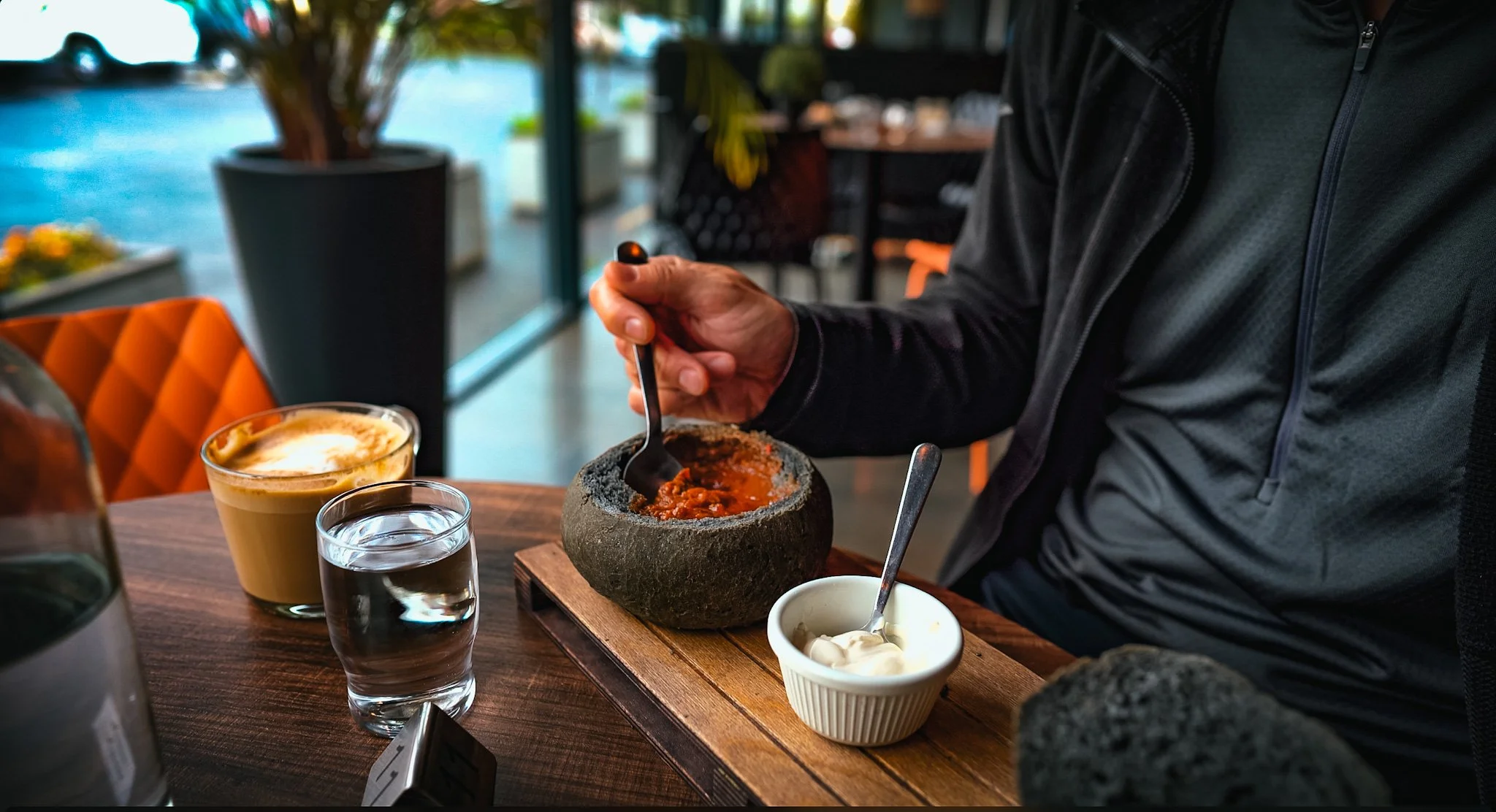
ICELAND FOODIE SPOTS YOU MUST TRY
10 Essentials To Prepare For The Best High Altitude Hike

What is it about high altitude hiking that excites those that love hiking? One obvious reason is the incredible view when you're above the world. Your body just feels serene and your mind feels free. The thing is, to get there, you need to be prepared. You need to understand just how hiking at high altitudes can effect your body.
It’s an absolute incredible experience, but being prepared for the environment is essential. So just an FYI, anything between 8,000 feet - 12,000 feet is considered high altitude. Anything between 12,000 Feet - 18,000 feet is considered Very high altitude and anything above 18,000 Feet is considered Extreme high altitude. ( We are definitely not ready for that…yet! )
Dave and I have hiked for many years, but never have we experienced a hike like our recent, and let me point out, first high altitude hike.
We hiked up the beautiful volcano, Nevado de Toluca in Mexico. The highest peak is 15,345 feet. Now we're headed to the 2 beautiful crater lakes that sit close to 14,000 feet. The larger of the two crater lakes is called Lago del Sol (Sun Lake) and the smaller one, but apparently is deeper is called Lago de la Luna (Moon Lake).
OMG..Let's just say, I REALLY felt the effects of going from sea level to high altitude in one day.
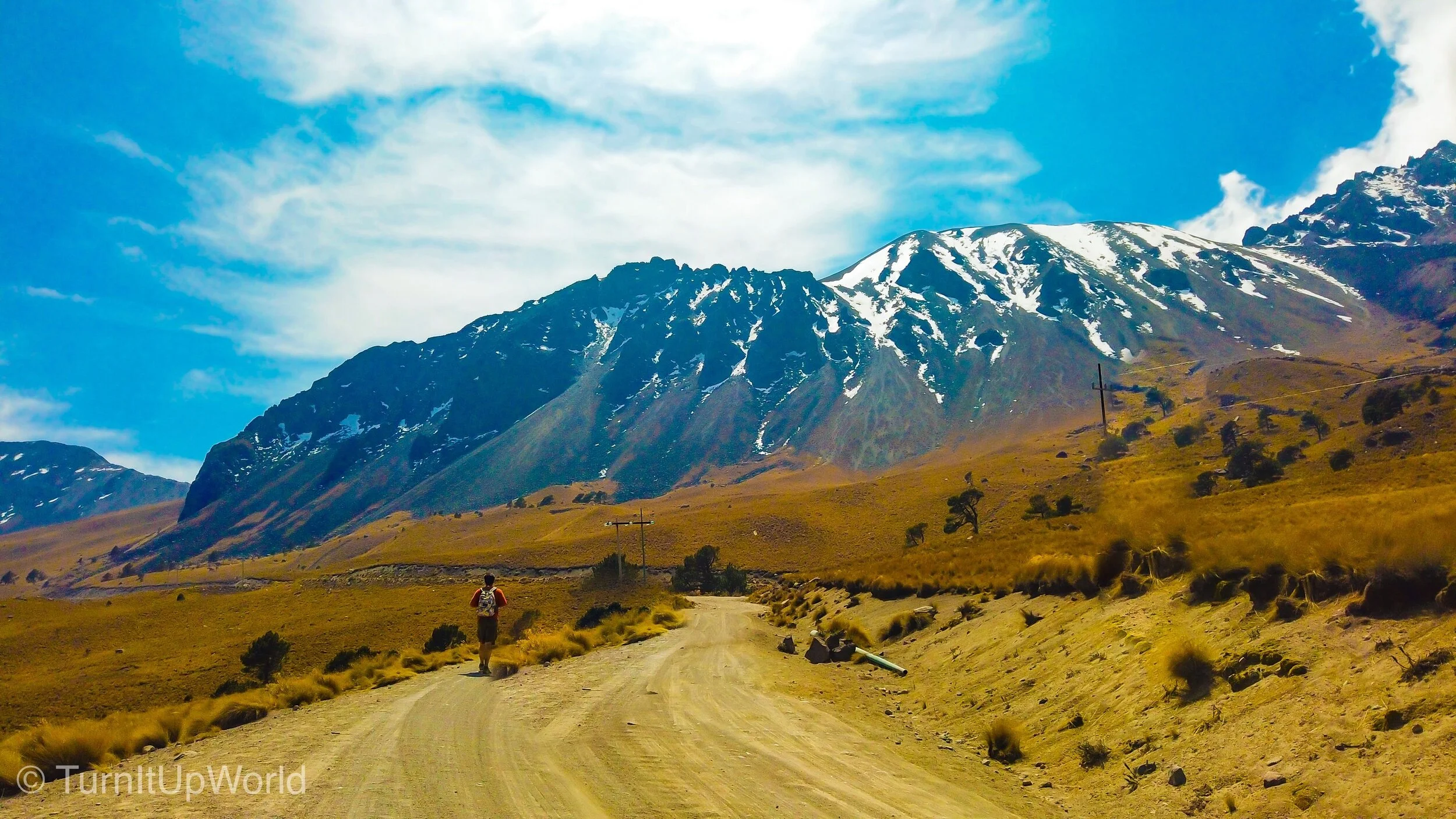
It’s an absolute incredible experience, but being prepared for the environment is essential.
10 Essentials to Prepare for a high altitude hike.
1.Get Plenty of Rest The Night Before
It's important to give your body the rest it needs to prepare for such a hike. It's important to get a good night sleep every night, just saying!
2.Drink Plenty of Fluids
Gatorade is a very good hydration option. It has electrolytes which helps to combat dehydration because it has sugar and electrolytes like sodium and potassium. If you don't like Gatorade you can use the electrolyte tablets called Nuun in your water. They come in many different flavors and they work really well.
We chose Gatorade. We love Gatorade. The only problem was we packed quite a few bottles which made our backpack pretty heavy. Lesson learned! Might go for the Nüün tablets next time to lighten the load.
3.You Need to Slowly Acclimate to the High Altitude Levels
We would say this is one of the most important step when trekking up high altitudes. We had an incredible guide that demanded we take our time and ascend slowly.
Now it might have been easier if it were a multi-day hike. Getting to a certain altitude then resting for the evening at that altitude or slightly lower, which might allow for your body to adapt.
4. If Hiking Without A Guide, Invest In a Heart Rate & Oxygen Levels Monitor
This device is called a Fingertip Pulse Oximeter Oximetry Blood Oxygen Saturation Monitor . It measures not only your heat rate but your oxygen levels. We had a guide and she had one of these devices, and all throughout our hike she would take our heart rate and observe our oxygen levels, making sure we were still in the safe zone to continue the hike.
It's a very inexpensive device, but in our opinion, it's a small investment for an important device to have on you.
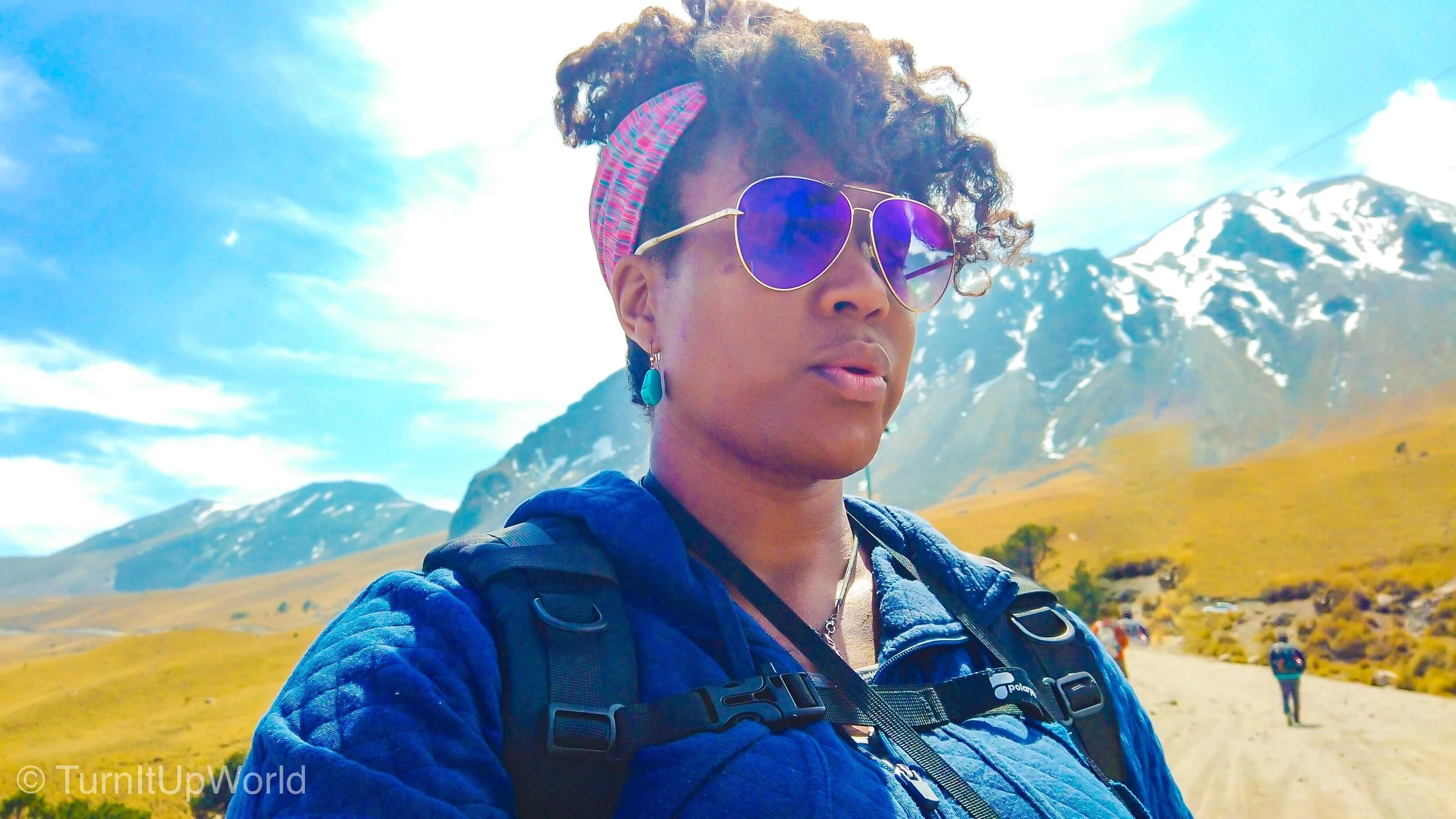
5.Portable Charger(s)
As travel vloggers, it's really important that we have fully charged devices or at least a portable charger(s) to keep the visuals alive. It would totally suck to be in a beautiful location and NOT be able to capture that moment because you have a dead camera or cellphone. Let's not forget, it's always important to have a charged phone in case of an emergency.
We had a portable charger with us, which we only used at the end of the hike to refresh our almost dead cellphones. We did have several extra charged batteries for our camera and gear. So we were pretty stocked.
We have several but the one we like the most is the Sony CycleEnergy Dual Port. It's light and works very well. Allowing you to charge two devices at once.
These are a few that we have but we love this one the most.
6.Wear and Bring Sunblock
It's SOOOO important to cover your body and face in sunblock if you're doing a high altitude hike. Preferably a broad spectrum high SPF. You do realize your that much closer to the sun. Dave wore shorts and did put sunblock on his face and hands but totally missed his legs and back of his neck and he really got sunburned. Even his scalp was a bit sun burnt.
So any part of your body that's not covered up should be lathered in sunblock. Perhaps even your scalp. Although, it might be a little weird and feel very greasy. You could wear one of those cool, or to some, not so cool hats, like the one Dave has, but didn't wear that day. He has am Original Outback Oilskin called 'Willis with Mesh hat that he picked up at Outback Trading Co.
This is Dave's hat.
7.Bring Snacks and Lunch
Bringing things like a candy bar, or gummy bears, a banana, or whatever sugar works for you, and of course lunch is important. Things that are rich in carbohydrates can really help reduce the risk of high altitude sickness. This definitely helped me.
8.Bring Something Warm and a Windbreaker
I wore layers which for one helped so I didn’t have to pack it in my already stuffed bag. The thing is you don't know what to expect at high altitude. It could be pretty windy and the temperatures could be cold. So having those extra layers might be just the ticket to keep you happy.
9.Bring Toilet Paper and a Small Trash Bag
What was interesting in Mexico. This was before we started the hike. We stopped at a gas station market to pick up a few snacks and while there we wanted to use the restroom. They actually charge you for toilet paper. This seemed to be common at a few places. So BYOTP (Bring Your Own Toilet Paper).
Now on the mountain, it's just you and nature. You're going to have to use the bathroom along the way. I had to use it like a million times. I was staying hydrated along the hike and I had to go. Also, there's just something about the high altitude that just makes a girl have to go. So thank goodness, Dave packed the toilet paper.
10. Go Make Some Awesome Memories
Now that we gave you some awesome tips, we want you to just enjoy the thrill. Enjoy mother nature at her finest. Embrace the experience and make some lasting memories.
It's taking amazing trips like this that brings Dave and I so much closer.
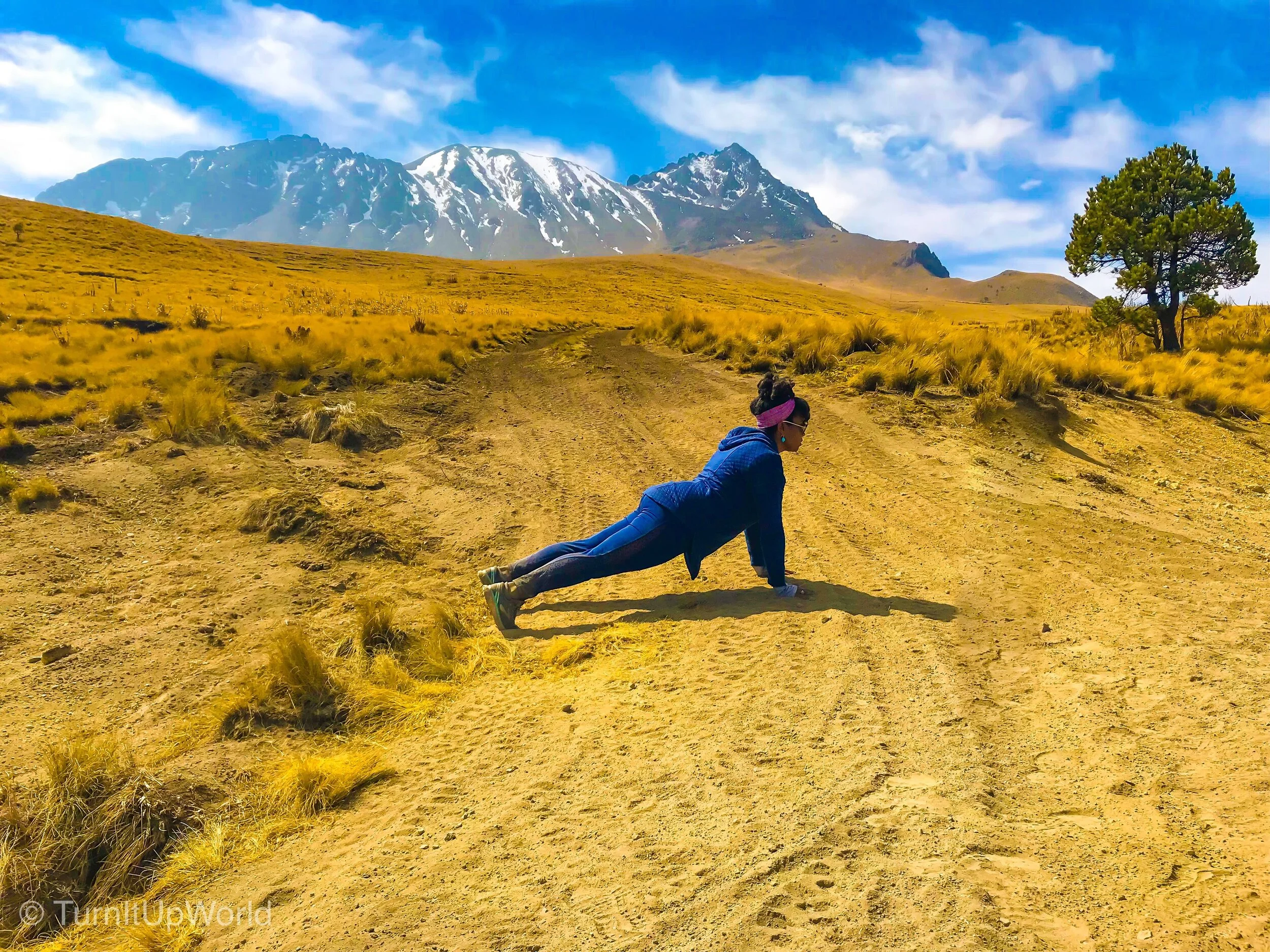
If you're planning on doing a high altitude hike, we'd LOVE to hear where you're adventuring off to. Let us know in the comments below. We'd love to get some ideas to add to our upcoming travels. Also, if you're interested in any of the great that we're wearing just click the link.
We are not sponsored by any of the products we mentioned. It's strictly our opinion, and products we enjoy using. The links attached to the items listed are affiliate links. We only use links of products we like and enjoy. If you like to try the items we suggest, please use the attached links. This helps keep us on the road. Thank you!